
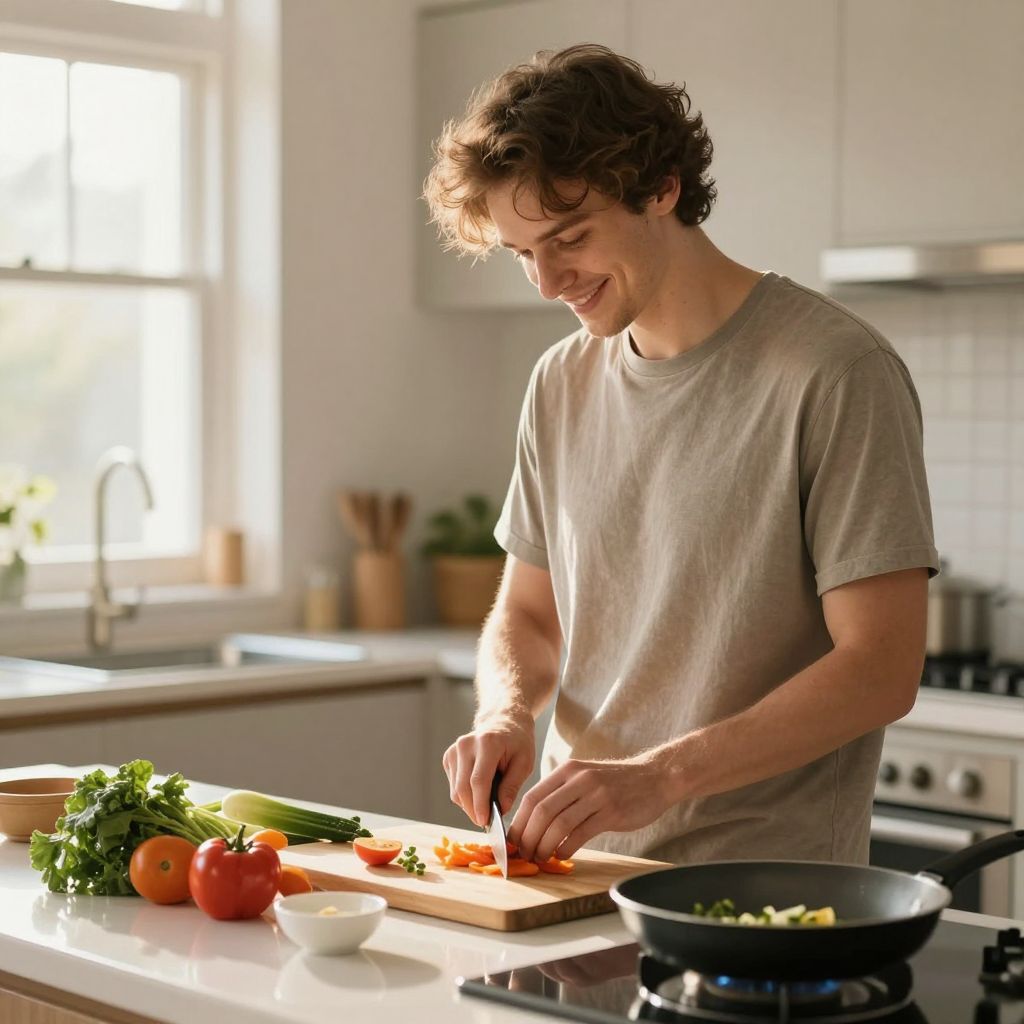
Most people eat at least three times a day, yet many never learn to cook beyond the basics. This pattern creates a silent dependency that drains money, limits health, and quietly erodes confidence in one of life’s most fundamental skills.
Learning to cook transforms more than your meals. It reshapes your relationship with autonomy, creativity, and even how your brain solves problems under pressure.
What Are the Benefits of Learning How to Cook?
Learning to cook gives you direct control over your nutrition, saves significant money over time, builds practical problem-solving skills, and creates measurable improvements in mental health and social connection. Cooking is one of the few daily activities that strengthens executive function while producing immediate, tangible rewards.
Financial Freedom Through Kitchen Competence
The average American spends over $3,000 annually on restaurant meals and takeout, according to the Bureau of Labor Statistics. A household that cooks most meals at home cuts this expense by 60 to 70 percent without sacrificing quality or variety.
Every meal you cook instead of ordering out represents a small financial victory that compounds over months and years. The math becomes undeniable when you calculate it weekly rather than per meal.
Cooking also reduces food waste. When you understand how to use ingredients across multiple dishes, you stop throwing away wilted vegetables and expired condiments.
This skill creates budget flexibility that opens space for other priorities: travel, education, or simply reducing financial stress. How much would an extra $2,000 per year change your options?
Nutritional Control and Health Outcomes
Restaurant meals contain an average of 1,200 calories per serving, often loaded with sodium, sugar, and industrial oils your body struggles to process. Home-cooked meals typically contain 200 to 400 fewer calories and a fraction of the sodium.
Research published in the journal Public Health Nutrition found that people who cook at home five or more times per week consume significantly more fruits and vegetables and show better overall diet quality. This pattern directly correlates with lower rates of type 2 diabetes, cardiovascular disease, and obesity.
When you cook, you see exactly what goes into your food. No hidden sugars, no mysterious sauces engineered to override your satiety signals.
You control portion sizes, ingredient quality, and cooking methods. This transparency allows you to make informed decisions rather than blind guesses about what you put in your body.
Cognitive and Psychological Benefits
Executive Function Development
Cooking demands skills that psychologists categorize as executive functions: planning, sequencing, time management, and adaptive problem-solving. You read a recipe, gather ingredients, coordinate multiple cooking processes, and adjust based on real-time feedback.
This complex orchestration activates the prefrontal cortex and strengthens the neural pathways responsible for organization and impulse control. The act of following a recipe from start to finish mirrors the cognitive demands of project management.
Studies on older adults show that regular cooking correlates with slower cognitive decline and better preservation of memory. The multisensory nature of cooking keeps multiple brain regions engaged simultaneously.
For younger people, cooking builds the same executive skills that improve performance in academic and professional settings. The kitchen becomes a laboratory for practicing competence under mild pressure.
Stress Reduction and Mindfulness
Cooking offers a structured form of what psychologists call “behavioral activation,” a proven treatment for depression and anxiety. The act of chopping vegetables, measuring ingredients, and monitoring a simmering pot requires present-moment attention that naturally interrupts rumination.
Research in the journal Frontiers in Psychology demonstrates that creative activities like cooking reduce cortisol levels and increase positive affect. The combination of sensory engagement and productive output creates a state similar to flow.
Unlike passive stress relief like scrolling through social media, cooking produces something you can eat and share. This tangible result reinforces a sense of agency that counteracts feelings of helplessness.
The repetitive motions of cooking, the warmth of a stove, the aroma of garlic hitting hot oil: these sensory experiences ground you in physical reality. They pull you out of abstract worry and into embodied presence.
Creative Expression and Experimentation
Once you grasp the fundamentals, cooking becomes a medium for creativity that requires no special talent or expensive equipment. You learn that a basic tomato sauce transforms into dozens of different meals depending on what you add.
This experimentation builds comfort with trial and error, a skill that transfers to every area of life. You discover that most cooking mistakes are edible, and many “failures” teach you more than perfect executions.
The kitchen becomes a low-stakes environment for practicing innovation. You test hypotheses about flavor combinations, learn what works, and refine your approach.
This iterative process mirrors the scientific method. It trains your brain to view setbacks as information rather than judgment.
Social and Relational Advantages
Deepening Connections Through Shared Meals
Cooking for others communicates care in a way that words often cannot. The effort you invest in preparing food signals that someone matters enough to receive your time and attention.
Research consistently shows that families who eat home-cooked meals together report stronger relationships, better communication, and lower rates of behavioral problems in children. The meal itself is secondary to the ritual of gathering without distraction.
When you invite friends over for a meal you cooked, you create a different kind of social experience than meeting at a restaurant. The informality of a home-cooked dinner lowers social performance anxiety and encourages genuine conversation.
Cooking together, whether with a partner or friends, turns meal preparation into a collaborative activity. You negotiate, compromise, and coordinate, all while working toward a shared goal.
Cultural Connection and Identity
Food carries cultural memory and identity in ways that transcend simple nutrition. Learning to cook traditional dishes connects you to heritage, family history, and community.
When you recreate a dish from your childhood or your ancestry, you participate in a form of living history. You preserve techniques, flavor profiles, and stories that might otherwise disappear.
This connection matters for psychological grounding. Studies on cultural identity show that maintaining ties to heritage practices, including food traditions, strengthens resilience and self-concept.
Even if you explore cuisines outside your own background, cooking teaches respect for other cultures through direct engagement with their ingredients and methods. You learn that every cuisine represents centuries of adaptation and wisdom.
Practical Life Skills and Self-Sufficiency
Building Real Independence
True independence means you can meet your basic needs without constant external support. Cooking sits at the foundation of this capability, alongside shelter and safety.
When you know how to cook, you free yourself from dependence on restaurants, delivery apps, and pre-packaged foods. This freedom matters most during financial hardship, illness, or unexpected life disruptions.
People who cannot cook remain perpetually vulnerable to circumstances beyond their control: rising food costs, limited restaurant options, dietary restrictions. Cooking skills buffer against these vulnerabilities.
This self-sufficiency also builds quiet confidence. You prove to yourself repeatedly that you can transform raw ingredients into nourishment, a small but significant demonstration of capability.
Problem-Solving Under Constraints
Cooking teaches you to work with what you have rather than waiting for ideal conditions. You learn substitutions, improvisations, and creative solutions when you lack a specific ingredient.
This adaptive thinking trains resourcefulness that applies far beyond the kitchen. You practice the skill of making good decisions with imperfect information and limited resources.
Running out of milk, you discover you can use water and butter in many recipes. Missing a spice, you learn which alternatives provide similar flavor profiles.
These small problem-solving victories accumulate. They reshape how you approach obstacles in general, replacing paralysis with experimentation.
Long-Term Health and Longevity
Disease Prevention Through Dietary Quality
The most comprehensive nutritional research, including the Nurses’ Health Study and the Health Professionals Follow-Up Study, consistently links home cooking with reduced risk of chronic disease. People who cook most of their meals show significantly lower rates of metabolic syndrome, heart disease, and certain cancers.
This protection comes not from perfection but from consistency. Home-cooked meals eliminate the excessive salt, sugar, and industrial fats that drive inflammatory processes when consumed daily.
Restaurant meals are engineered for maximum palatability, which means maximum stimulation of reward pathways in your brain. This hijacks normal satiety signals and promotes overconsumption.
Home cooking resets these patterns. Your taste buds recalibrate to appreciate subtler flavors, and your appetite regulation improves.
Sustainable Habits That Last
Unlike restrictive diets that rely on willpower and deprivation, cooking creates a sustainable approach to nutrition. You enjoy the food you make, which means you can maintain the practice indefinitely.
The habit of cooking becomes self-reinforcing because it produces immediate rewards: better taste, more energy, financial savings, and social connection. These benefits motivate continued practice without requiring constant discipline.
Research on habit formation shows that behaviors tied to multiple positive outcomes are far more likely to persist long-term. Cooking checks every box.
As your skills improve, the time investment decreases while the quality increases. What once felt like a chore becomes an efficient routine that delivers consistent value.
Getting Started: Overcoming Initial Barriers
The Myth of Natural Talent
Many people avoid learning to cook because they believe it requires innate ability or artistic flair. This belief is false and counterproductive.
Cooking is a learnable skill built through repetition, not a mysterious talent you either possess or lack. The celebrity chefs you see on television spent thousands of hours practicing basic techniques before developing their expertise.
Start with simple recipes that use five ingredients or fewer. Master basic techniques like sautéing, roasting, and boiling before attempting complex dishes.
Every expert cook began as a beginner who burned rice and overcooked pasta. The difference between them and non-cooks is simply persistence through early failures.
Time Management and Efficiency
The perception that cooking requires hours of daily effort prevents many people from starting. In reality, most weeknight meals take 20 to 30 minutes once you develop basic proficiency.
Batch cooking and meal preparation compress this time further. Spending two hours on a Sunday preparing components for the week eliminates daily decision fatigue and reduces cooking time to minutes.
Learn to cook once and eat two or three times. Soups, stews, and grain bowls improve with time and provide multiple meals from a single cooking session.
As you build skills, you develop intuition about timing and multitasking. You learn to prep vegetables while water boils, or marinate protein while you chop aromatics.
Equipment and Budget Considerations
You do not need expensive cookware or a large kitchen to cook effectively. A single pot, a single pan, a knife, and a cutting board will handle 90 percent of basic cooking.
Marketing convinces people they need specialized gadgets and premium ingredients. This is false. Professional chefs work with the same basic tools home cooks use.
Start with affordable ingredients: beans, rice, pasta, eggs, seasonal vegetables, and inexpensive cuts of meat if you eat it. These staples form the foundation of countless nutritious meals.
As your skills improve and your interest grows, you can invest in better equipment. But competence comes from practice, not from owning the right gear.
Practical Next Steps
Choose three simple recipes you genuinely want to eat. Write down the ingredients, buy them this week, and cook each recipe once.
Do not aim for perfection or variety at first. Repetition builds competence faster than constantly trying new recipes.
Notice what changes after two weeks of cooking most of your meals. Pay attention to your energy levels, your grocery spending, and how you feel about your capability.
The benefits of learning to cook extend far beyond the plate. This skill reshapes your brain, your body, your budget, and your relationships in ways that compound over years.
Start small, practice consistently, and trust that competence builds with each meal. The kitchen is waiting, and so are the hundreds of small victories that come from feeding yourself well.
For more guidance on building practical life skills and sustainable growth, explore our resources on learning how to live with greater intention and autonomy. You can also discover strategies for becoming the best version of yourself through small, consistent changes that create lasting transformation.