
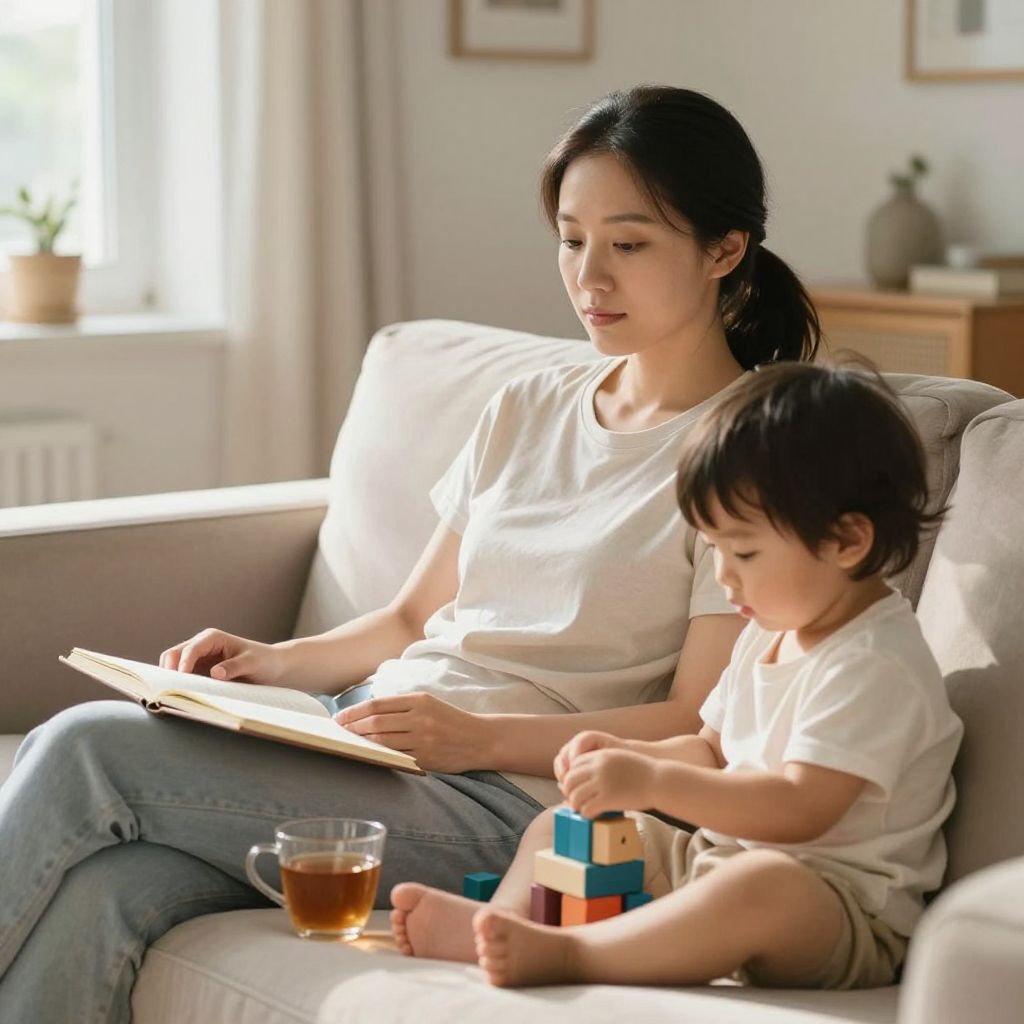
Fulfillment as a stay-at-home mom doesn’t arrive through some mystical alignment of circumstances or when your children finally sleep through the night. Research from positive psychology shows that fulfillment comes from meeting core psychological needs: autonomy, competence, connection, and purpose. These needs don’t disappear when you become a parent, but the path to meeting them shifts entirely.
The challenge isn’t that staying home lacks meaning. The challenge is that the work offers delayed feedback, interrupted focus, and little external validation while demanding everything you have.
How Do You Feel Fulfilled As A Stay-At-Home Mom?
You feel fulfilled as a stay-at-home mom by actively building identity beyond motherhood, creating structured autonomy within your day, connecting with adults who understand your experience, and anchoring your daily tasks to long-term values. Fulfillment requires intentional design, not just dedication to your children.
Build Identity Separate From Your Children
Self-determination theory identifies autonomy as a core human need. When your entire identity fuses with your children’s schedules, behaviors, and moods, you lose the sense of self that psychological health requires.
This doesn’t mean loving your children less. It means protecting the parts of you that existed before them and will continue after they leave.
Maintain at least one interest that belongs only to you. Read books your children will never touch, learn a skill unrelated to parenting, or follow a subject that genuinely fascinates you.
Research on role identity shows that people who define themselves through a single role experience greater psychological distress when that role feels threatened or unrewarding. Diversifying your sense of self creates resilience.
Schedule this time the same way you schedule doctor appointments. Block out one hour twice a week minimum for an activity that reminds you who you are outside of caregiving.
Create Micro-Goals With Visible Progress
Parenting offers almost no immediate feedback loops. You won’t know if you’re doing a good job for years, sometimes decades.
This violates how human motivation works. The progress principle, documented by Teresa Amabile’s research at Harvard, shows that small wins fuel motivation and well-being more than any other workplace factor.
You need wins you can see today. Set daily micro-goals unrelated to your children’s behavior: complete a workout, finish one home project, write three pages, organize one drawer.
Track these wins visibly. Use a simple checklist, a habit tracker, or even tally marks on a calendar.
The act of completing something and marking it done creates the sense of competence that long-term parenting goals cannot provide on a Tuesday afternoon when everyone is crying.
Design Your Environment For Success
Control What You Can Control
You cannot control tantrums, sleep regressions, or whether your toddler eats vegetables. Trying to find fulfillment through outcomes you cannot control guarantees frustration.
Shift your focus to inputs. Fulfillment comes from executing your values, not from your children’s compliance.
Define what matters to you as a parent: patience, presence, creativity, structure, adventure, or calm. Then measure yourself against your own standard, not your child’s response.
Did you stay calm when your child melted down? That’s a win, regardless of whether the meltdown ended quickly.
Build Structure Into Unstructured Days
Autonomy doesn’t mean a lack of structure. Research shows that autonomy within structure produces better outcomes than complete freedom.
Create anchor points in your day: breakfast at a set time, outside time before lunch, quiet time after lunch, dinner prep at a consistent hour. These anchors create predictability without rigidity.
Within those anchors, allow flexibility. The morning might include a walk, playground time, or painting, but it happens in the same window daily.
This structure protects your mental energy. Decision fatigue drains you faster than physical exhaustion, and unstructured days demand constant decision-making.
Prioritize Adult Connection
Loneliness Undermines Everything Else
Social isolation predicts depression more reliably than almost any other factor. Staying home with small children creates isolation by default, even when you’re never physically alone.
Talking to toddlers all day doesn’t meet your need for adult conversation, intellectual stimulation, or emotional reciprocity. Pretending it does only deepens the loneliness.
Schedule adult interaction with the same priority you give your children’s needs. Join one group that meets regularly: a book club, a mom’s group, a fitness class, or a volunteer team.
The format matters less than the consistency. You need people who know your name and notice when you’re absent.
Find Your People, Not Just Any People
Not all mom friendships reduce loneliness. Time spent with people who make you feel judged, inadequate, or invisible can increase isolation.
Look for people who ask real questions and listen to your answers. Seek out moms who talk about topics beyond parenting and who share your values or interests.
This might take time. Keep showing up until you find one person who feels like a real connection, then invest there.
Reframe The Work You’re Already Doing
Connect Daily Tasks To Long-Term Values
Folding laundry and wiping counters feel meaningless because you can’t see how they connect to what matters. Job crafting research shows that people find more meaning in their work when they consciously link daily tasks to larger purpose.
Cleaning the kitchen isn’t just cleaning. It’s creating a calm environment where your family gathers, teaching your children that we care for our spaces, or protecting your own mental clarity.
Before you start a mundane task, name the value it serves. This small cognitive shift changes how the work feels.
Recognize Invisible Labor As Real Labor
You plan meals, track appointments, remember birthdays, monitor developmental milestones, research school options, maintain social connections, and manage household systems. This cognitive labor exhausts you even though no one sees it.
Acknowledging this work as real work matters. You’re not “just” staying home, and you’re not “doing nothing” when you sit on the couch planning the next two weeks in your head.
Keep a running list for one week of every decision you make and every task you mentally track. Seeing the volume in writing validates what you already know but constantly doubt.
Protect Your Physical And Mental Health
Sleep Deprivation Destroys Fulfillment
No amount of purpose or connection compensates for chronic sleep deprivation. Research is unambiguous: sleep loss impairs emotional regulation, cognitive function, and psychological well-being more than almost any other factor.
If your children wake you multiple times nightly, address this as the crisis it is. Sleep train, bedshare safely, hire help, tag-team with your partner, or get your pediatrician involved.
You cannot feel fulfilled when you’re running on four hours of broken sleep. This isn’t a personal failing; it’s biology.
Move Your Body Daily
Exercise isn’t optional for mental health. Decades of research confirm that physical activity reduces anxiety and depression as effectively as medication for mild to moderate symptoms.
You don’t need a gym membership or an hour-long workout. You need to move your body with intention every single day: walk with the stroller, do bodyweight exercises during naptime, or dance in your kitchen.
Commit to 20 minutes minimum. Put it on your calendar and treat it like any other appointment you wouldn’t skip.
Navigate The Comparison Trap
Social Media Distorts Reality
Comparing your internal chaos to someone else’s curated highlight reel guarantees dissatisfaction. Research on social comparison shows that upward comparison (comparing yourself to those who seem better off) consistently decreases life satisfaction.
Limit your exposure to accounts that make you feel inadequate. If someone’s feed leaves you feeling worse about your own life, unfollow without guilt.
Curate your social media to include accounts that educate, inspire, or make you laugh, not accounts that showcase an impossible standard you’ll never meet.
Define Success On Your Own Terms
What does a good day look like for you? Not for your neighbor, your mother, or the parenting influencer with perfect lighting.
Write down three to five markers of a successful day in your home. Maybe it’s everyone eating one meal together, getting outside, or you staying patient during a hard moment.
Judge your days against this standard, not against an imaginary ideal that includes homemade organic snacks, educational activities, and a spotless home.
Plan For The Future Without Guilt
Staying Home Doesn’t Mean Staying Forever
You can fully commit to being home with your children while preparing for what comes next. These aren’t contradictory positions.
Keep your skills current: take online courses, maintain professional connections, freelance part-time, or volunteer in your field. Protecting your future employability doesn’t betray your present commitment.
Research on career interruptions shows that women who maintain some professional engagement during caregiving years re-enter the workforce more easily and at higher levels than those who disengage completely.
Financial Security Affects Fulfillment
Financial dependence creates vulnerability that impacts psychological well-being. Studies show that economic autonomy predicts life satisfaction, particularly for women.
If possible, maintain some income stream, keep retirement accounts active, or ensure your name stays on shared assets. Have honest conversations with your partner about financial planning and long-term security.
This isn’t pessimistic; it’s practical. Protecting yourself financially allows you to stay home from a position of choice rather than constraint.
Give Yourself Permission To Struggle
Fulfillment Doesn’t Mean Constant Happiness
You can feel fulfilled in your role while still finding many days hard, boring, or lonely. Fulfillment means your life aligns with your values, not that you feel joyful every moment.
Research distinguishes between hedonic well-being (feeling good) and eudaimonic well-being (living meaningfully). Eudaimonic well-being often involves difficulty, effort, and sacrifice.
Stop measuring your success by how happy you feel on random Tuesday mornings. Measure it by whether you’re living according to what matters most to you.
Ask For Help Without Shame
Needing help doesn’t mean you’re failing. The nuclear family model that isolates mothers with small children is historically recent and culturally specific, not a biological norm.
Humans evolved to raise children in communities with extensive support systems. You’re not supposed to do this alone.
Identify one area where you need help: cleaning, childcare, meal prep, or emotional support. Then ask for it directly from your partner, family, or friends, or hire it if you can afford to.
Make Space For Rest And Pleasure
Rest Isn’t Earned
You don’t have to deplete yourself before you deserve to rest. This transactional view of rest guarantees burnout.
Build rest into your routine proactively: quiet time in the afternoon, early bedtime, one morning sleeping in each week, or an evening off monthly. Rest prevents collapse; it doesn’t follow it.
Communicate these needs clearly to your partner and protect them as non-negotiable. Your capacity to show up for your children depends on regular restoration.
Pleasure Matters
Small pleasures throughout your day make hard work sustainable. This isn’t indulgence; it’s maintenance.
Identify simple pleasures you can access daily: good coffee, a favorite podcast, ten minutes reading before bed, or a show you actually enjoy after the kids sleep.
Don’t wait for permission to enjoy small things. Build them into your day intentionally and without apology.
Conclusion
Fulfillment as a stay-at-home mom comes from meeting your core psychological needs within the constraints of intensive caregiving. It requires protecting your identity, creating visible progress, connecting with adults, linking daily tasks to deeper values, and maintaining your physical and mental health.
This work won’t look Instagram-worthy most days. It looks like blocking time for yourself, setting micro-goals you can actually achieve, and finding one friend who understands what you’re living through.
Start with one area from this article. Choose the section that resonated most and implement one specific change this week: schedule adult interaction, set a daily micro-goal, or name the value behind a task you do every day.
Fulfillment doesn’t arrive fully formed. You build it through small, consistent choices that honor both your children and yourself.
Looking to strengthen your sense of direction and meaning? Learning how to live with purpose can help you align your daily actions with your deepest values. If you’re struggling with the isolation that often accompanies staying home, discovering how to enjoy spending time alone transforms solitude from loneliness into restoration. Explore more articles on personal growth and practical living that help you build a life that feels as good on the inside as it looks on the outside.