
Most people treat solitude like punishment. They fill every quiet moment with noise, scroll through their phones at red lights, and panic when plans fall through and they face an empty evening. The inability to be alone doesn’t signal a love of connection; it reveals a dependence on distraction and an unexamined fear of one’s own company.
Learning to be by yourself transforms this fear into capacity. Research from the University of Rochester shows that people who develop comfort with solitude demonstrate higher levels of autonomy, emotional regulation, and creative problem-solving. This article maps the practical steps that build genuine comfort with your own presence.
How Do You Learn To Be By Yourself?
You learn to be by yourself by gradually building tolerance for solitude through structured practice, addressing the specific discomforts that arise, and developing activities that engage you without requiring external validation. This process rewires both your nervous system’s response to alone time and your beliefs about what solitude means.
1. Distinguish Loneliness From Solitude
Loneliness describes the painful gap between the connection you have and the connection you want. Solitude describes chosen time alone, regardless of your social satisfaction.
You can feel lonely in a crowded room and peaceful in complete isolation. The difference lies in choice and meaning, not in the presence or absence of people.
Studies published in the Journal of Personality and Social Psychology demonstrate that perceived choice determines whether time alone depletes or restores you. When you choose solitude with intention, your brain processes it as restorative; when isolation feels forced, the same circumstance triggers stress responses.
Start by reframing. Tell yourself the truth: “I am choosing to spend this time alone” rather than “Nobody wanted to hang out with me.”
2. Start With Manageable Time Blocks
Don’t attempt a solo weekend retreat if fifteen minutes alone makes you uncomfortable. Build capacity the same way you build muscle: through progressive overload.
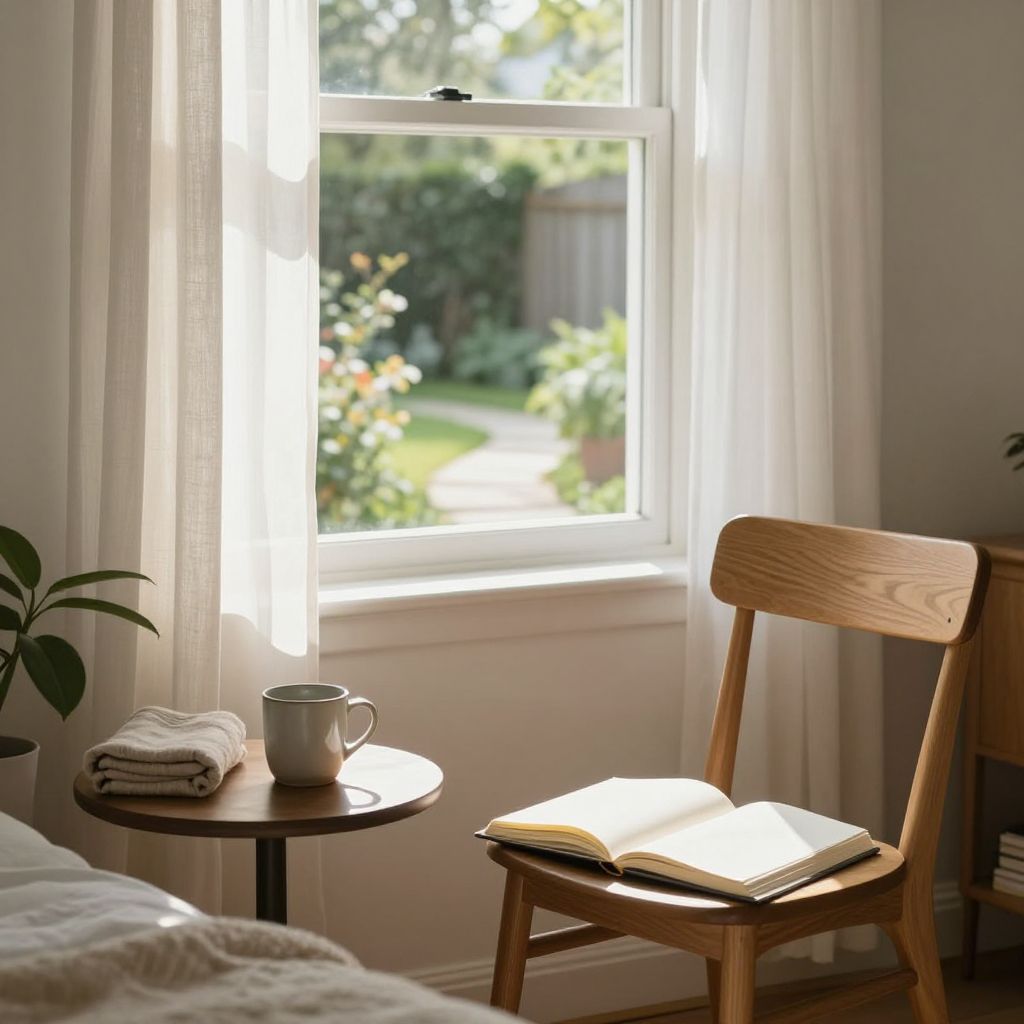
Begin with thirty-minute blocks where you commit to being alone without digital distraction. Sit with a book, take a walk, or simply drink coffee in silence.
Track what feelings emerge during these blocks. Boredom, anxiety, restlessness, and self-criticism commonly surface. Notice them without judgment; they provide data about what your solitude practice needs to address.
Gradually extend these periods as discomfort decreases. Within several weeks, most people find that an hour alone shifts from draining to neutral, then from neutral to genuinely pleasant.
3. Separate Alone Time From Screen Time
Scrolling through social media while alone doesn’t count as solitude. It simulates connection while delivering none of its actual benefits, leaving you both isolated and overstimulated.
Research from the American Psychological Association links excessive digital consumption during alone time to increased feelings of loneliness and decreased well-being. The screen creates the illusion of company while preventing the genuine self-connection that makes solitude valuable.
Designate specific periods as screen-free. Use app timers, put your phone in another room, or establish rules like “no devices until after my morning walk.”
The first few screen-free sessions will feel awkward. Your brain has learned to reach for the phone when silence appears. Let the awkwardness exist without fixing it.
Building Comfort With Your Own Thoughts
Why Internal Noise Increases In Silence
Many people avoid solitude because their thoughts turn harsh when external noise disappears. Self-criticism, rumination, and anxiety flood in the moment distractions lift.
This happens because constant stimulation functions as avoidance. Busyness and noise suppress uncomfortable thoughts temporarily; they don’t resolve them. When you finally sit in silence, the backlog surfaces.
Neuroscience research shows that the brain’s default mode network activates during rest and solitude. This network processes self-referential thoughts, memories, and future planning. For people who haven’t developed metacognitive awareness, this activation feels chaotic rather than productive.
Practice Observing Without Engaging
You don’t need to fix every thought that arises during alone time. Mindfulness-based cognitive therapy demonstrates that observing thoughts without attachment reduces their emotional intensity.
When a self-critical thought appears during solitude, practice labeling it: “That’s the voice that says I’m wasting time,” or “That’s the worry about what others think.” This creates distance between you and the thought.
The goal isn’t to eliminate uncomfortable thoughts but to stop treating them as emergencies that require immediate distraction. They’re mental events, not facts about your worth or predictions about your future.
After several weeks of this practice, most people notice that the intensity and frequency of intrusive thoughts during solitude decreases naturally. The brain learns that these thoughts don’t require action.
Developing Genuinely Engaging Solo Activities
Choose Activities That Require Active Engagement
Passive consumption (watching videos, scrolling feeds) doesn’t build comfort with solitude. It fills time without creating meaning or skill.
Select activities that demand your attention and offer clear feedback: cooking a complex recipe, learning an instrument, drawing, writing, woodworking, or solving puzzles. Flow research from psychologist Mihaly Csikszentmihalyi shows that activities with clear goals and immediate feedback generate intrinsic motivation and reduce self-consciousness.
These activities shift your focus from “Am I okay being alone?” to “Can I execute this technique?” The question changes from existential to practical.
Physical Movement Changes Mental States
Walking, running, swimming, or practicing yoga alone serves dual functions: it occupies your body while allowing your mind to wander productively.
Stanford research demonstrates that walking increases creative output by an average of 60 percent compared to sitting. Rhythmic physical activity also regulates the nervous system, making solitude feel calming rather than agitating.
Build a regular solo movement practice. Choose something you can do without coordinating with others, and commit to it three times per week minimum.
Pay attention to the thoughts that arise during movement. You’ll likely notice they differ in quality from the thoughts that appear when you’re sitting still and understimulated.
Addressing The Fear Of Missing Out
Understand The Comparison Trap
Social media convinces you that everyone else enjoys constant excitement while you sit home alone. This perception distorts reality.
Research published in the Journal of Social and Clinical Psychology found that limiting social media use to 30 minutes per day significantly decreased loneliness and depression. The study suggests that social comparison, not actual isolation, drives much of the distress people attribute to being alone.
When you spend Friday night by yourself, you’re not missing a party everyone else attended. You’re choosing one experience over another. Most people at that party will forget it within a week.
Reframe What You Gain, Not Just What You Miss
Time alone offers specific benefits that group activities cannot provide: uninterrupted focus, complete autonomy over your schedule, and the space to process emotions and experiences without performing for others.
Keep a simple log of what you accomplish or how you feel after solo time. Note when you solved a problem, finished a project, or simply felt rested.
Most people discover that their best work, deepest rest, and clearest thinking happen in solitude. They just never noticed because they never tracked it.
Managing The Discomfort That Arises
Expect An Adjustment Period
If you’ve spent years avoiding alone time, the first several weeks of intentional solitude will feel uncomfortable. This discomfort doesn’t indicate failure; it signals adjustment.
Psychologists describe this as “extinction burst,” the temporary increase in unwanted behavior (in this case, anxiety or restlessness) that occurs when you stop reinforcing a pattern (constant distraction). The discomfort peaks, then declines.
Don’t interpret initial discomfort as evidence that solitude doesn’t suit you. Your nervous system simply needs time to recalibrate.
Use Structured Reflection
Journaling during or after solo time helps you process what surfaces. Write without editing: what you felt, what you noticed, what thoughts repeated, what surprised you.
Research on expressive writing shows that putting experiences into words reduces their emotional intensity and increases insight. Writing transforms vague discomfort into specific, addressable concerns.
Review your entries after a month. You’ll often notice patterns: certain times of day feel harder, specific worries repeat, or particular activities consistently improve your mood.
Building A Sustainable Solitude Practice
Schedule It Like Any Other Commitment
Relying on spontaneous alone time means it won’t happen. Other commitments, invitations, and distractions will always fill the space.
Block specific times on your calendar for solitude. Treat these blocks with the same respect you’d give a meeting or doctor’s appointment.
Consistency matters more than duration. Thirty minutes alone three times per week builds more capacity than an occasional four-hour stretch.
Protect Your Boundaries
People around you may interpret your alone time as rejection or availability. They’ll text, call, or suggest plans during your scheduled solitude.
Communicate clearly: “I’m taking time for myself this evening” or “I’ve set aside Saturday mornings for solo activities.” You don’t need to justify or explain further.
Assertiveness research confirms that clear, simple boundaries reduce conflict and increase relationship satisfaction. People who respect their own time teach others to respect it too.
Adjust Based On Feedback
Your solitude practice should feel challenging but not punishing. If solo time consistently leaves you drained or more anxious, investigate why.
Check whether you’re actually alone or simply understimulated. Check whether you’re ruminating instead of reflecting. Check whether you’ve chosen passive activities that increase rather than decrease restlessness.
Modify your approach based on what you learn. Some people need more structure during alone time; others need more freedom. Some benefit from silence; others prefer instrumental music.
Recognizing Progress
You’ll know you’re developing genuine comfort with solitude when several shifts occur. Canceled plans stop feeling like disasters and start feeling like opportunities. You stop checking your phone constantly during alone time. You begin protecting solo hours rather than filling them at the first invitation.
The deepest sign of progress appears when you start craving solitude the way you once craved company. You’ll notice when you haven’t had enough time alone, and you’ll prioritize getting it.
This doesn’t mean you become antisocial or stop valuing relationships. It means you develop a balanced capacity: comfort both with others and with yourself. Research on psychological well-being consistently identifies this balance as a marker of maturity and mental health.
Learning to be by yourself builds the foundation for everything else. It enables you to enter relationships from wholeness rather than need, to make decisions based on values rather than distraction, and to know yourself beyond the reflected opinions of others. The skills you develop in solitude serve you everywhere else.
Start this week. Choose one thirty-minute block. Put the phone away. Sit with yourself. Notice what happens. Then do it again.
Building a stronger relationship with yourself opens the door to deeper self-awareness and purpose. If you’re ready to take the next step in your personal development, explore how to focus on yourself with intention and clarity. For those moments when you feel disconnected from who you truly are, learn practical strategies to find yourself again and reconnect with your core values. These resources offer additional tools for creating a life rooted in self-knowledge and genuine growth.